
Written by Peter, owner and lead technician at Trusted Garage Door Service in Logan, Utah.
Garage door cables do not get much attention until one fails. Then the door suddenly hangs crooked, jerks to one side or refuses to move, and you are left looking at a loose wire wrapped around the top of the door.
Cables work with your springs to lift and lower a door that can weigh well over a hundred pounds. When one fails, the whole system is out of balance. Here is how to spot a cable problem early and why it is one of the repairs we always recommend leaving to a professional for garage door repair in Logan, Utah.
Key Takeaways
- A crooked door, a slack or frayed cable, or a cable off its drum are the main warning signs.
- Cables are connected to springs and bottom brackets under heavy tension.
- Stop using the door as soon as you notice a cable problem.
- Cables and springs wear together, so both should be inspected during a repair.
What Garage Door Cables Do
Most garage doors in Cache Valley use one of two spring systems, and each uses cables differently.
Torsion Spring Systems
Torsion springs sit on a shaft above the door. A cable runs from each bottom corner of the door up to a drum at each end of that shaft. As the springs unwind, the drums wind the cables and lift the door evenly.
Extension Spring Systems
Extension springs run along the horizontal tracks. Lift cables pass over pulleys to raise the door, and a separate safety cable should run through the center of each spring. DASMA’s homeowner and inspector checklist explains that this containment cable keeps a broken spring from flying across the garage.
Lift cables are built to a published industry standard for strength. DASMA’s standard for lifting cables sets minimum breaking strengths, which is a reminder of how much load these thin wires carry.
Warning Signs of a Failing Cable
- The door sits crooked, with one side lower than the other.
- A cable looks slack when the door is closed.
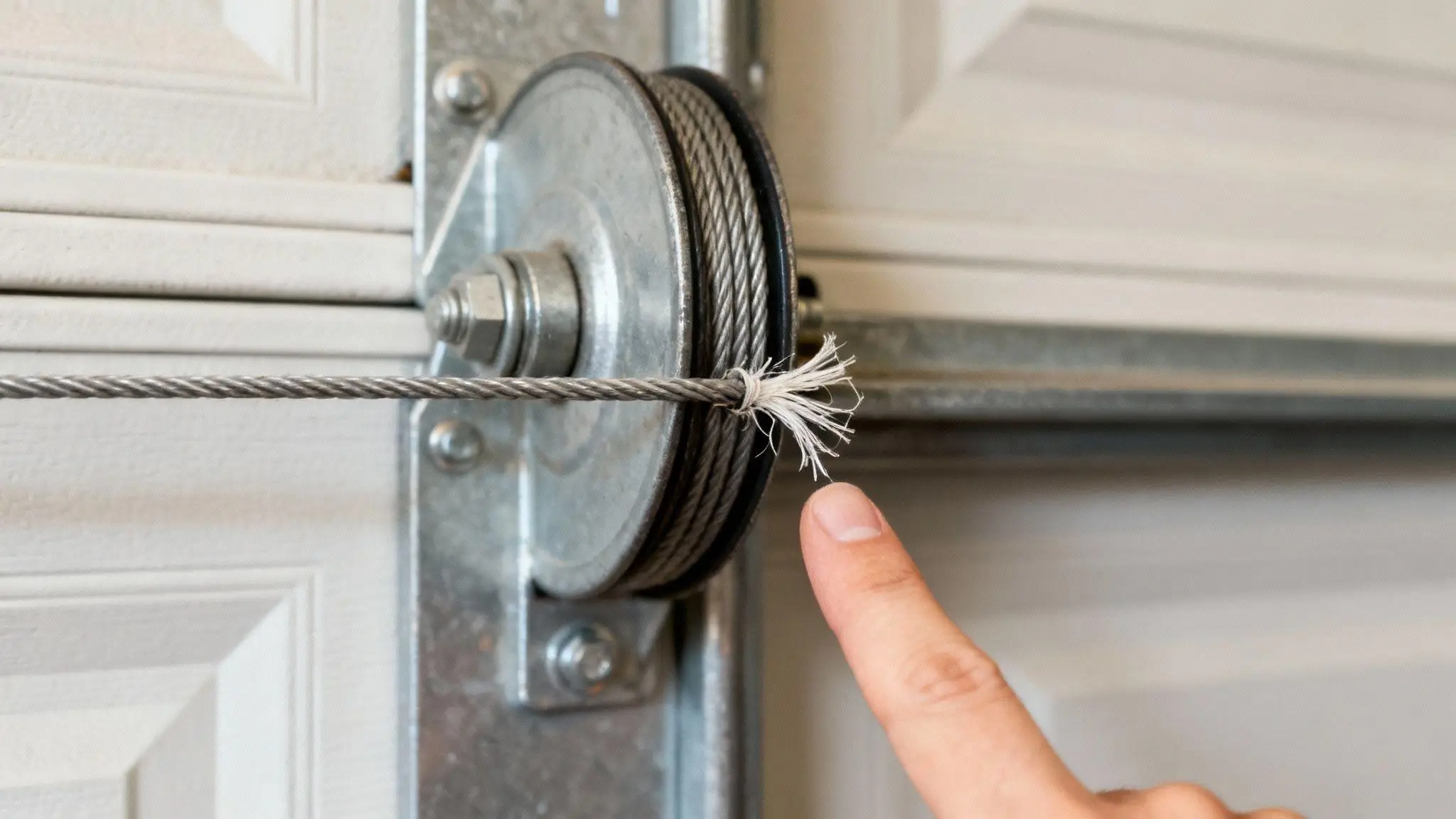
- You can see frayed strands, kinks or rust on the cable.
- A cable has come off its drum or pulley.
- The door jerks, shudders or stops partway up.
- You heard a loud snap and the door now feels heavy.
Check from a safe distance with a flashlight. Do not touch, pull or try to rewind a loose cable.
Why Garage Door Cables Break
Wear and Rust
Every cycle bends the cable over the drum or pulley. Over time, strands break, especially near the bottom bracket where moisture, road salt and snowmelt sit.
A Broken Spring
When a spring fails, the cable on that side can suddenly lose tension and jump off the drum.
Track or Roller Problems
If a roller binds or the door comes off the track, the cable on that side can go slack and unwind.
Extra Weight on the Door
Adding weight, like a heavy decorative overlay or a replacement panel, changes the load the cables and springs carry. DASMA’s guidance on adding weight to a garage door warns against it for this reason.
Why Cable Repair Is Not a DIY Job
Cables are attached to the bottom brackets and to the drums, and both are tied into a spring system under high tension. Loosening the wrong bolt, unwinding a drum or removing a bottom bracket can release that energy suddenly. Serious hand and face injuries happen this way every year. The safe repair involves securing the door, releasing spring tension with proper winding bars, replacing the cables on both sides, rewinding the springs and rebalancing the door.
What Happens During a Professional Cable Repair
- We secure the door in place and release spring tension safely.
- We replace both cables, not just the broken one, so the door lifts evenly.
- We inspect the drums, pulleys, bottom brackets and springs for wear.
- We rewind the springs, balance the door and test the opener and safety reverse.
If the springs are near the end of their life, replacing them on the same visit usually saves you a second service call. You can see what our garage door repairs cover.
How to Make Cables Last Longer
Keep the bottom of the door clear of slush and salt, and have the cables, springs and balance checked once a year. A routine garage door maintenance visit catches fraying and rust before a cable fails.
What to Do Right After a Cable Breaks
A snapped cable is startling, but a few calm steps keep the situation safe until help arrives.
- Leave the door where it is. If it is closed, keep it closed. If it is open and level, do not try to bring it down.
- Unplug the opener so nobody presses the remote or wall button.
- Keep children, pets and cars out from under the door and away from the springs.
- Do not pull the red emergency release. Without a working cable, the door can drop or twist.
- Take a photo of the loose cable and the springs from a safe distance. It helps us bring the right parts.
Then call a technician. Our Logan garage door installation and repairs crew carries common replacement parts on the truck, so many cable repairs are finished in a single visit.
Frequently Asked Questions
Can I still use my garage door with a broken cable?
No. The door can twist, jam or fall. Leave it closed if it is closed, keep people clear, and call for repair.
Should both cables be replaced at the same time?
Yes. Cables wear at a similar rate, and a new cable on one side and an old cable on the other can make the door lift unevenly.
Why is my garage door crooked when it closes?
A crooked door usually means a cable has slipped, stretched or broken on one side, or a spring has failed.
The Bottom Line
A broken or slipping cable throws the whole door out of balance. Stop using the door, keep everyone clear and let a trained technician handle it.
Contact Trusted Garage Door Service or call/text (435) 554-4962 for a free quote. We serve Logan and Cache Valley, plus Brigham City and Tremonton.