
Written by Peter, owner and lead technician at Trusted Garage Door Service in Logan, Utah.
Stand inside your garage on a sunny afternoon and look at the bottom of the door. If you can see a line of daylight, you are also letting in cold air, blowing snow, water and the occasional mouse looking for a warm place to spend the winter.
The fix is usually simple: a new bottom seal and fresh weatherstripping. Here is how to tell when yours is worn out, which type you need, and why a correct fit matters for a door that also has to close safely. For anything beyond the seal itself, our team handles full garage door repair in Logan, Utah.
Key Takeaways
- Daylight, drafts, puddles or debris blowing under the door are the clearest signs of a failed bottom seal.
- Garage doors use three kinds of weatherstripping: the bottom seal, the side and top stop molding, and sometimes a threshold seal on the floor.
- The new seal has to match your door’s retainer channel, or it will not stay in place.
- A good seal keeps the garage warmer, which helps your opener, springs and anything you store there.
Signs Your Garage Door Seal Needs Replacing
- You can see light under or around the door when it is closed.
- The rubber is cracked, brittle, flattened or missing pieces.
- Leaves, snow or water collect on the garage floor after a storm.
- The door freezes to the ground often.
- You notice droppings or nests in the garage in fall.
- The garage feels much colder than it used to, or the room above it is drafty.
Rubber does not last forever. Sun, road salt and Cache Valley’s freeze-thaw cycles harden it over time, and once it stops flexing, it stops sealing.
The Three Types of Garage Door Weatherstripping
Bottom Seal
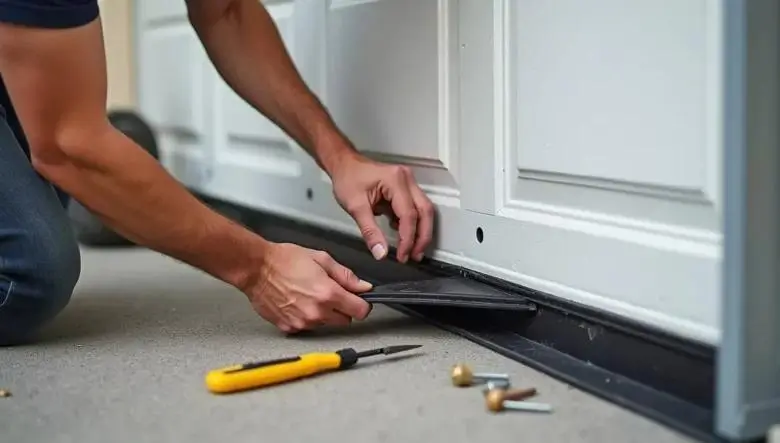
This is the flexible strip along the bottom of the door. On most steel doors it slides into an aluminum retainer channel. Common shapes include U-shaped (bulb) seals, T-style seals and bead seals, and the shape has to match the channel on your door. Older wood doors often use a flat seal nailed directly to the bottom edge.
Side and Top Stop Molding
The vinyl strips on the door frame seal the sides and top. When they crack, pull away from the jamb or sit too far from the door, you get drafts around the edges even if the bottom is sealed.
Threshold Seal
A threshold seal is a rubber strip glued to the floor under the door. It helps when the slab is uneven or slopes toward the garage, which is a common reason water runs inside and freezes.
Why Seals Fail Faster in Cache Valley
Our winters swing between freezing nights and sunny afternoons. Water gets into small cracks in the rubber, freezes and expands. Add road salt carried in on tires and the occasional door that froze to the floor and was forced open, and seals wear out quickly.
A worn seal also costs you comfort. The U.S. Department of Energy’s guide to air sealing explains how unsealed gaps let heated air escape, and an attached garage with gaps under the door makes the rooms beside and above it colder.
DIY or Professional Replacement?
Replacing a bottom seal looks easy, and on some doors it is. But a few details trip people up:
- Matching the profile. Seals are not universal. The wrong shape will not slide into the retainer or will pop out the first cold morning.
- Damaged retainers. A bent or corroded aluminum channel has to be replaced before a new seal will hold.
- The bottom brackets. The cables that lift your door attach at the bottom corners under heavy spring tension. Removing those brackets to slide a seal in is not a safe DIY job.
- Door travel. A thicker seal can change where the door stops. The opener’s close limit and safety reverse should be checked afterward.
The Department of Energy’s weatherstripping job aid makes the same point for entry doors: check the door for smooth operation first, and make sure new weatherstripping does not get in the way of how the door works.
What a Professional Seal Replacement Includes
When we replace weatherstripping, we measure the door and identify the retainer type, swap the bottom seal (and the retainer if needed), replace cracked stop molding on the sides and top, and adjust the opener so the door seals tight without straining. We finish by testing the safety reverse.
It pairs well with a seasonal garage door maintenance visit, since we are already checking the springs, rollers, cables and balance.
Should You Replace the Seal or the Door?
If the bottom panel is rotted, rusted through or badly bent, a new seal will not seal against it. In that case it may be time to look at replacement panels or a new insulated door. You can browse styles on our garage doors page or read about professional garage door installation.
Frequently Asked Questions
How often should a garage door bottom seal be replaced?
There is no fixed schedule. Replace it when it cracks, hardens, flattens or no longer touches the floor along its full width. Checking it every fall is a good habit.
Why is there still a gap after I replaced the seal?
The slab may be uneven, or the door may not be traveling all the way down. A threshold seal or a close-limit adjustment usually solves it.
Will a new seal stop mice from getting in?
A tight bottom seal and good side molding close the most common entry points. Check the corners, where gaps are easy to miss.
Can a bad seal make my door freeze shut?
Yes. A cracked or flattened seal holds water against the floor, and that water freezes overnight.
The Bottom Line
A fresh bottom seal is one of the cheapest ways to make your garage warmer, drier and better protected this winter. If you can see daylight under the door, now is the time to fix it, before the snow piles up.
For garage door repairs or a free weatherstripping quote, contact Trusted Garage Door Service or call/text (435) 554-4962. We also serve Brigham City and Tremonton.