
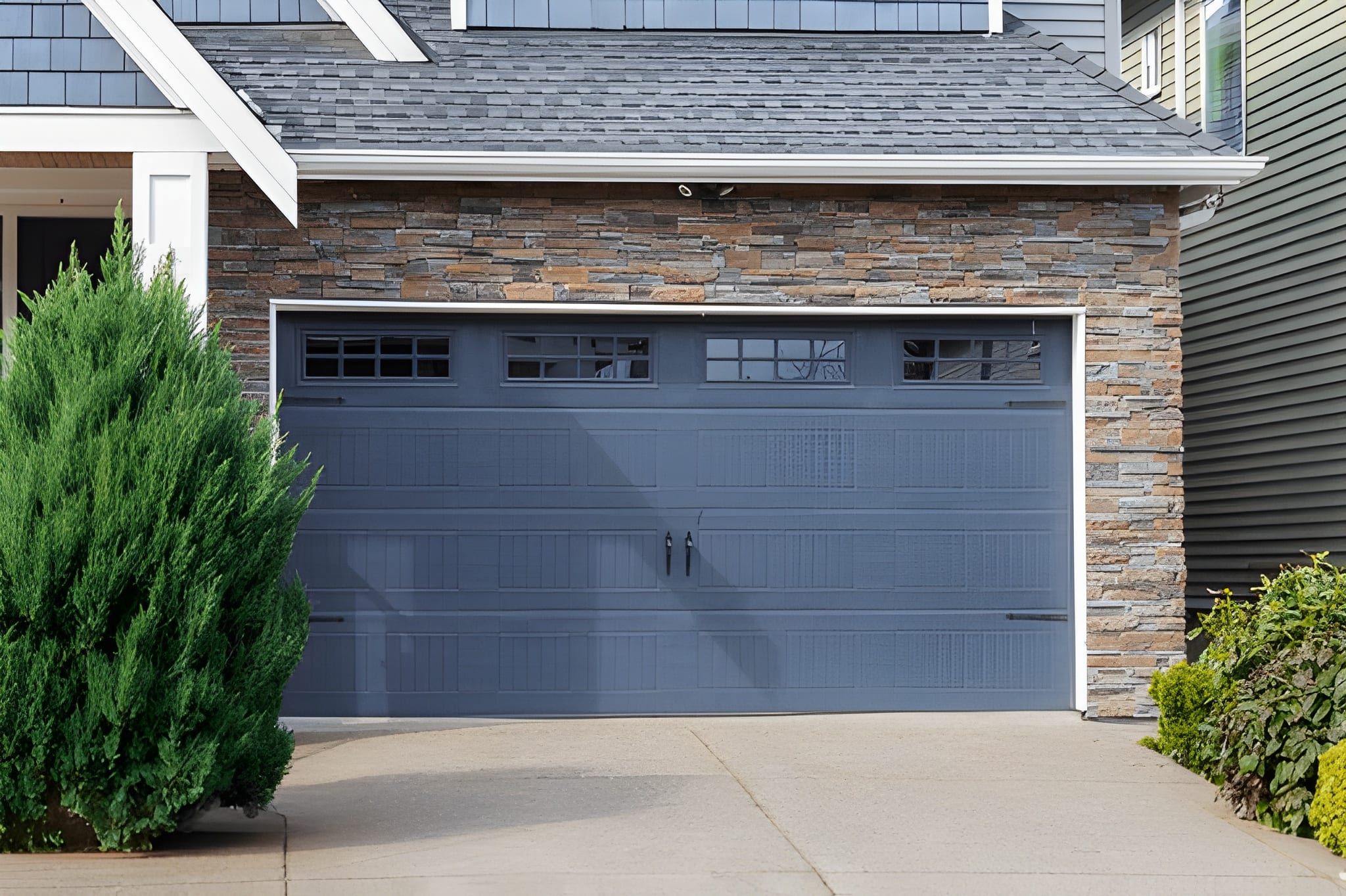
Your garage door affects more than you think. It impacts your energy bills, home comfort, and property value. The U.S. Department of Energy reports that uninsulated garage doors can account for up to 25% of heat loss in homes with attached garages. That’s money literally escaping through your garage. Understanding insulated vs non-insulated doors helps you make the right choice for your home and budget. You’ll discover the real differences in performance, costs, durability, and energy savings. Some doors work better for certain situations than others. Let’s break down which type makes sense for your specific needs and how much you’ll really save over time.
What Makes Insulated Doors Different
The debate about insulated vs non-insulated doors starts with construction. These aren’t just minor variations. The differences affect everything from how your door feels to how long it lasts.
Non-insulated doors use a single layer of steel or aluminum. They’re lightweight and simple. The metal sits exposed on both the interior and exterior. You can see and feel the cold metal inside your garage.
Insulated doors sandwich insulation material between two layers of steel. The most common types are:
- Polyurethane foam (spray-applied)
- Polystyrene panels (rigid foam boards)
Polyurethane foam fills every space in the door, creating a solid, bonded structure. It offers R-values from 12 to 20. Polystyrene panels fit between the door’s frame and provide R-values from 4 to 10.
R-value measures insulation effectiveness. Higher numbers mean better insulation. An R-16 insulated door performs dramatically better than an R-0 non-insulated door.
The steel gauge matters too. Insulated doors typically use 24 or 25-gauge steel. Non-insulated doors often use thinner 27 or 28-gauge steel. Thicker steel means stronger, more durable doors.
Energy Savings and Cost Comparison
Money talks. Let’s compare insulated vs non-insulated doors based on what hits your wallet.
Upfront costs:
- Non-insulated single-layer door: $400-800
- Polystyrene insulated door: $800-1,500
- Polyurethane insulated door: $1,200-2,500
The price gap seems big. But looking at total cost over the door’s lifetime changes the picture.
Annual energy savings with insulated doors:
If your garage connects to your home, insulated doors reduce heating and cooling costs. Savings depend on:
- Your local climate
- How much time you spend in the garage
- Whether rooms above the garage get conditioned air
- Your current energy rates
Homes in extreme climates (hot summers or cold winters) save more. A typical homeowner in Minnesota might save $150-300 yearly with an insulated door. Someone in mild San Diego might save $50-100.
Over a 20-year lifespan, those savings add up. The Minnesota homeowner saves $3,000-6,000. That covers the extra cost of insulation and then some.
Non-insulated doors make financial sense if:
- Your garage is detached from your home
- You live in a mild climate year-round
- You rarely use your garage for anything but parking
- Budget constraints are tight
Calculate your situation. Take the extra cost of an insulated door and divide it by your estimated annual savings. This tells you how many years until you break even.
Noise Reduction Benefits Explained
Quiet matters more than most people realize. The insulated vs non-insulated doors comparison includes sound dampening.
Non-insulated doors are loud. Really loud. Every time they open or close, you hear:
- Metal rattling and vibrating
- Hardware clanking
- The opener motor echoing
- Outside traffic and neighborhood noise
Insulated doors absorb sound significantly. The foam or polystyrene dampens vibrations and blocks external noise. The difference is dramatic.
Why noise reduction matters:
- Bedrooms above or next to the garage stay quieter
- Late-night arrivals don’t wake the family
- Early morning departures are less disruptive
- Garage workshops become more pleasant
- Home gyms in the garage work better
If you converted your garage into living space, insulation becomes even more important. You’ll want maximum noise control and temperature regulation.
Test this yourself. Visit a showroom that displays both types. Knock on each door. The hollow, tinny sound of non-insulated doors is obvious compared to the solid thunk of insulated ones.
Durability and Lifespan Differences
How long will your door last? The insulated vs non-insulated doors comparison reveals surprising differences in longevity.
| Feature | Non-Insulated | Insulated |
|---|---|---|
| Expected Lifespan | 10-15 years | 15-25 years |
| Dent Resistance | Low | High |
| Panel Stiffness | Flexible | Rigid |
| Weather Resistance | Moderate | Excellent |
| Maintenance Needs | Higher | Lower |
Non-insulated doors bend and dent easily. Kids throwing balls, bikes leaning against them, or accidental bumps create visible damage. The thin single-layer steel lacks structural reinforcement.
Insulated doors resist damage better. The foam core adds rigidity. The same impact that dents a non-insulated door barely marks an insulated one. This matters if you have active kids, play sports near the garage, or park in tight spaces.
Temperature cycling affects non-insulated doors more. Daily heating and cooling causes metal expansion and contraction. Over years, this creates:
- Panel warping
- Paint cracking
- Hardware loosening
- Seal deterioration
Insulated doors handle temperature swings better. The insulation stabilizes the door temperature, reducing stress on the steel.
Maintenance requirements differ too. Non-insulated doors need more frequent adjustments and repairs. Springs wear faster when lifting lighter doors at higher speeds. Insulated doors are heavier, so openers work less hard and last longer.
Best Uses for Each Door Type
Not every situation demands insulation. Here’s when each type of door makes the most sense in the insulated vs non-insulated doors decision.
Choose non-insulated doors for:
- Detached garages with no climate control
- Storage sheds and outbuildings
- Mild climates with minimal temperature extremes
- Garages used only for vehicle parking
- Rental properties where initial cost matters most
- Temporary structures
Choose insulated doors for:
- Attached garages connected to your home
- Garages with living space above
- Home workshops or hobby spaces
- Home gyms in the garage
- Areas with extreme hot or cold weather
- Homes where noise reduction matters
- Properties in harsh climates with storms
Your usage patterns matter. Do you spend time in your garage? Work on projects there? Park expensive vehicles that benefit from temperature protection? These situations favor insulated doors.
Think about your home’s layout. Rooms directly above or beside the garage benefit most from insulation. The garage wall becomes part of your home’s thermal envelope.
For more information on energy-efficient home improvements, visit the Department of Energy’s Energy Saver guide.
Climate Considerations for Your Location
Where you live dramatically affects the insulated vs non-insulated doors choice. Different climates create different needs.
Cold climate states (Alaska, Minnesota, Wisconsin, Maine):
Insulated doors are nearly mandatory. Winter temperatures drop below zero. Your attached garage becomes a thermal liability without insulation. Ice and snow accumulation around non-insulated doors creates problems. The metal conducts cold directly into your home.
Benefits in cold climates:
- Prevents frozen pipes in garage walls
- Keeps your car’s engine warmer for easier starts
- Reduces ice buildup on the door itself
- Protects tools and equipment from freezing
Hot climate states (Arizona, Texas, Florida, Nevada):
Insulation works both ways. It keeps heat out just like it keeps cold out. Garage temperatures in Phoenix or Houston can hit 130°F in summer. That heat radiates into your home.
Benefits in hot climates:
- Reduces air conditioning costs
- Keeps garage cooler for working
- Protects stored items from heat damage
- Makes the space more usable year-round
Moderate climate states (California, Oregon, Washington, North Carolina):
The decision becomes less clear. You’ll save some money with insulation but not as much as extreme climates. Base your choice on:
- How you use the garage
- Whether it connects to living space
- Your personal comfort preferences
- Budget flexibility
Humid climate considerations:
Insulated doors help control condensation. The temperature differential between inside and outside air creates moisture on non-insulated metal doors. This leads to rust and mold growth. Insulation reduces this temperature difference.
Return on Investment Analysis
Let’s talk real numbers. What’s the actual payback on insulated vs non-insulated doors over time?
Cost difference example:
- Non-insulated door: $600
- Polyurethane insulated door: $1,800
- Extra investment: $1,200
Annual savings calculations:
Cold climate home (Michigan):
- Estimated energy savings: $200/year
- Payback period: 6 years
- 20-year total savings: $4,000
- Net profit: $2,800
Moderate climate home (Tennessee):
- Estimated energy savings: $100/year
- Payback period: 12 years
- 20-year total savings: $2,000
- Net profit: $800
Mild climate home (Southern California):
- Estimated energy savings: $50/year
- Payback period: 24 years
- 20-year total savings: $1,000
- Net loss: $200
Non-monetary value factors:
Don’t forget benefits you can’t easily price:
- Increased home resale value
- Better noise control (worth a lot if it matters)
- More usable garage space year-round
- Improved durability and less maintenance
- Better protection for vehicles and stored items
Real estate appraisers view insulated garage doors positively. They’re considered a quality upgrade. Exact value depends on your market, but expect $500-1,500 added to your home’s value.
Check out Energy Star’s guidance on garage doors for additional information on energy efficiency standards.
Final Thoughts
The insulated vs non-insulated doors decision comes down to your specific situation. You’ve learned the key differences in construction, costs, energy savings, durability, and appropriate uses. Insulated doors deliver clear benefits for attached garages, extreme climates, and spaces you actually use. Non-insulated doors work fine for detached garages in mild climates where cost matters most.
Ready to upgrade your garage door with confidence? TGDS4UT specializes in both insulated and non-insulated garage door installations across the United States. Our experienced technicians help you choose the perfect door for your climate, budget, and needs. Stop wasting money on the wrong door. Get expert advice on which type maximizes your investment and comfort. Visit TGDS4UT.com today for your free consultation and quote. We’ll show you exactly how much you can save with the right door choice. Your perfect garage door is just one click away.