
Written by Peter, owner and lead technician at Trusted Garage Door Service in Logan, Utah.
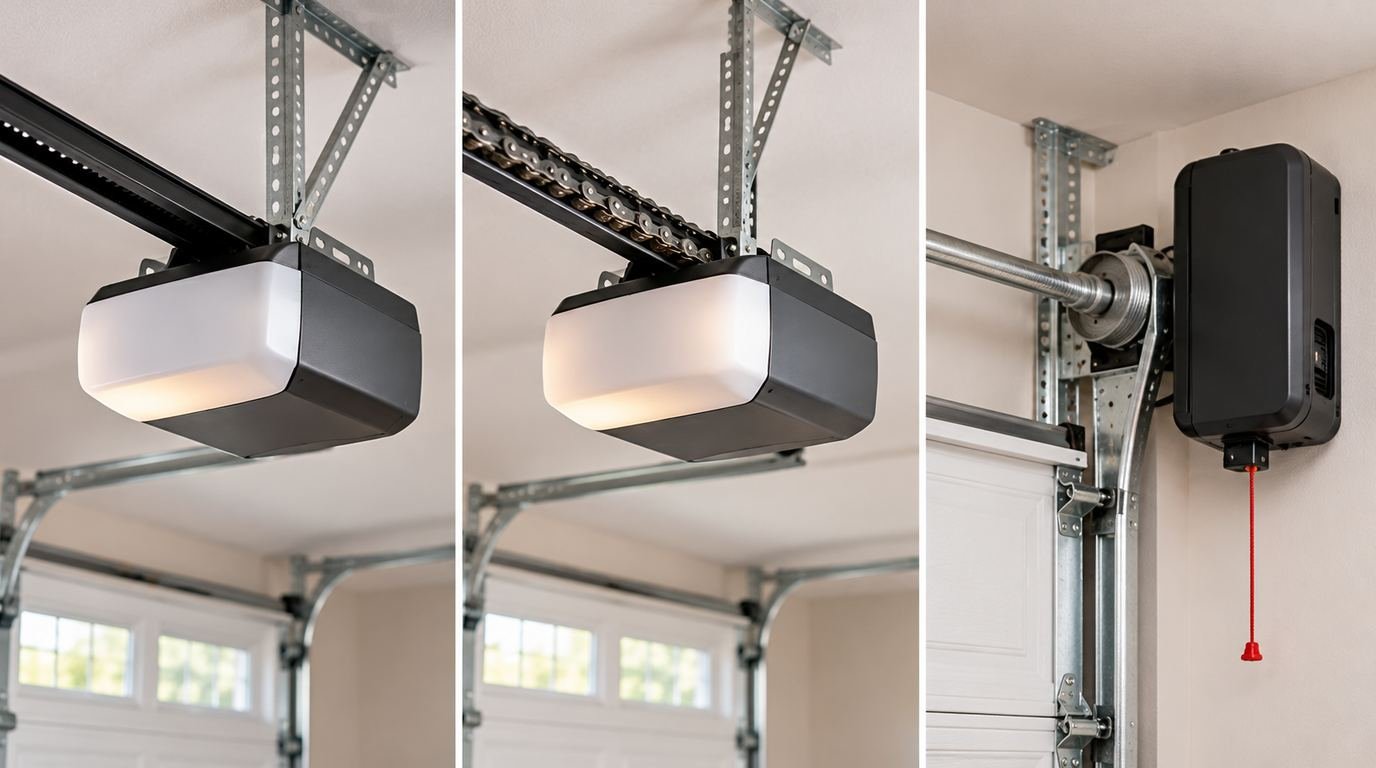
When an opener finally gives out, most people just want the door working again. But the opener you choose will live above your car for the next decade or more, so a few minutes of comparison pays off. The biggest decision is the drive type: chain, belt or wall-mount.
Here is how each one works, who it fits best and what to ask before you buy. If you would rather skip the research, we install and repair openers as part of our garage door repair in Logan, Utah service and can recommend the right fit for your door.
Key Takeaways
- Chain drives are durable and affordable but the loudest.
- Belt drives are much quieter and a favorite for homes with rooms above or beside the garage.
- Wall-mount (jackshaft) openers free up the ceiling but need a torsion spring door and the right setup.
- Every opener needs a balanced door. A new opener will not fix a bad spring.
How Garage Door Openers Work
Traditional openers hang from the ceiling and pull the door along a rail using a chain, belt or screw. Wall-mount openers sit beside the door and turn the torsion bar directly. All openers sold for homes must stop and reverse when they meet an obstruction. That federal requirement dates back to the CPSC’s 1993 rule for automatic garage door openers, which led to the safety sensors you see near the floor.
Chain Drive Openers
Pros
- Proven, simple design that handles heavy doors well.
- Usually the most budget-friendly option.
- Easy to service.
Cons
- Metal chain on a metal rail makes noise and vibration.
- The chain needs occasional tension adjustment and lubrication.
Best for: detached garages, shops and homes where noise is not a concern.
Belt Drive Openers
Pros
- Much quieter and smoother than a chain.
- Fewer vibrations through the ceiling and walls.
- Little maintenance.
Cons
- Usually costs more than a comparable chain drive.
- Very heavy or oversized doors may need a stronger model.
Best for: attached garages, bonus rooms above the garage and early risers who do not want to wake the house.
Wall-Mount (Jackshaft) Openers
Pros
- Mounts on the wall beside the door, leaving the ceiling open for storage, a car lift or high ceilings.
- Very quiet, because there is no rail or trolley overhead.
- A clean look with no hanging rail.
Cons
- Works only with torsion spring systems, and the installation has to suit the door and shaft.
- Usually the most expensive option.
- Needs proper clearance and power near the side of the door.
Best for: high-ceiling garages, storage racks overhead and homeowners who want the quietest setup.
Features Worth Looking For
- Battery backup, so you can open the door during a winter power outage. Ready.gov’s power outage checklist is a good reminder that outages often come with storms.
- Smartphone control and alerts, so you can check whether you left the door open.
- Bright LED lighting built into the opener.
- A soft-start, soft-stop motor that is easier on the door and quieter.
- Rolling security codes on the remotes.
Cold Weather Considerations in Cache Valley
Cold makes lubricants stiffer and puts more load on an opener, especially if the door is heavy or out of balance. Whatever drive type you choose, the opener should be sized for your door, and the door itself should be balanced so the opener is only guiding it. That is why every opener installation we do starts with a door check, and why yearly garage door maintenance keeps openers running through the winter.
Repair or Replace Your Opener?
Replacing a remote, a sensor or a worn gear is often enough for a newer opener. Consider replacement if the opener is old, lacks safety sensors, is very loud or keeps failing. If your opener has no safety sensors at all, DASMA’s homeowner checklist recommends replacing it. See what we cover under garage door repairs.
What Size Opener Does Your Door Need?
Drive type is only half of the decision. The opener also has to be strong enough for your door, and that depends on the door’s size, material and insulation.
- A standard single or double steel door that is properly balanced works with most residential openers.
- Heavier doors, such as insulated, wood, wood-look overlay or full-view glass doors, often call for a stronger model.
- Taller doors need a longer rail or a wall-mount unit that suits the door’s hardware.
- Many newer openers use DC motors, which start and stop softly and pair well with battery backup.
Horsepower ratings are a rough guide at best. A balanced door matters far more than a bigger motor, because the springs should carry the weight while the opener simply guides the door. When we quote a new opener, we check the door’s balance first and size the opener to the door, not the other way around. See our Logan garage door installation and repairs page for details.
Frequently Asked Questions
What is the quietest type of garage door opener?
Wall-mount openers are typically the quietest, followed closely by belt drives. Chain drives are the loudest.
Will a new opener fix a door that is hard to lift?
No. A door that is hard to lift by hand has a spring or balance problem. That needs to be fixed first, or it will wear out the new opener.
Can I install a wall-mount opener on any door?
No. Wall-mount openers need a torsion spring system and the right side clearance. We can tell you in one visit if your door qualifies.
The Bottom Line
Choose chain for value and toughness, belt for quiet everyday use and wall-mount for open ceilings and the quietest operation. Most of all, pair the opener with a well-balanced door.
Ready for a new opener or a full upgrade? Learn about our garage door installation or contact Trusted Garage Door Service at (435) 554-4962 for a free quote. We serve Logan, Brigham City and Tremonton.